OpenAI Highlights the Next Phase of AI-Powered Education for Countries Worldwide
Quick Summary
- OpenAI has shared its vision for the future of AI-driven education, explaining how countries can use artificial intelligence to improve learning, accessibility, and digital skills at scale.
- The company says AI could become a foundational tool for modern education systems.
Introduction
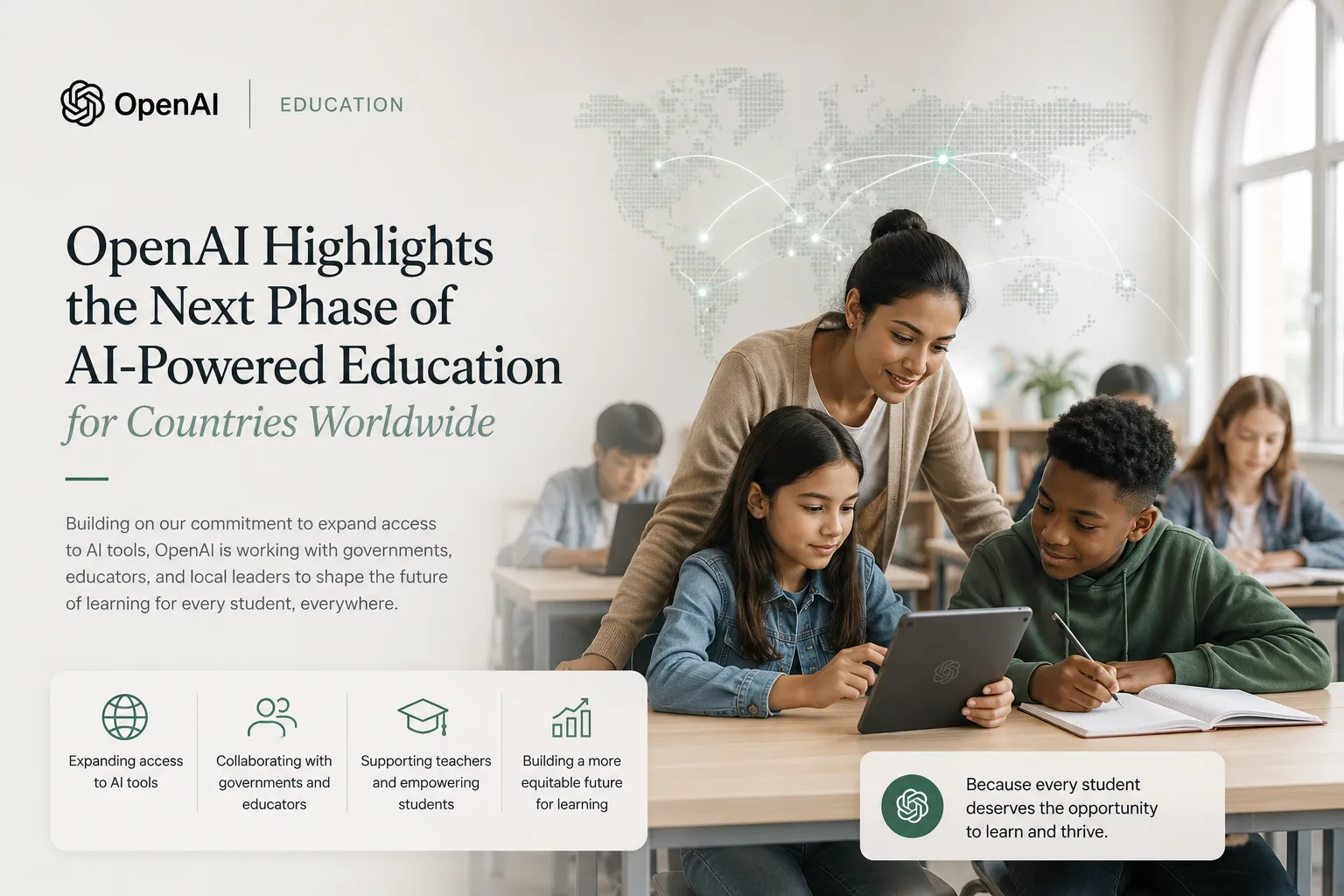
OpenAI has published a new article discussing what it calls the “next phase of education” for countries adopting artificial intelligence at a national level. The company believes AI has the potential to transform how students learn, how teachers teach, and how governments scale high-quality education across entire populations.
According to OpenAI, many countries are now moving beyond experimenting with AI tools and are beginning to explore long-term national strategies for AI-powered education. The company says generative AI systems like ChatGPT can help personalize learning experiences, improve access to educational resources, and support teachers with administrative and instructional tasks.
One of the biggest opportunities highlighted in the article is personalized learning. Traditional education systems often struggle to provide individual attention to every student due to limited teacher capacity and large classroom sizes. OpenAI believes AI tutors and conversational assistants could help students learn at their own pace by offering customized explanations, interactive support, and instant feedback.
The company also emphasized how AI can improve accessibility in education. Students from remote areas or underserved communities may gain access to high-quality learning materials through AI-powered platforms. Language translation, adaptive learning systems, and real-time assistance could make education more inclusive and available to a broader population.
Another major theme in the article is workforce readiness. OpenAI says countries need to prepare students for an economy increasingly shaped by artificial intelligence. This includes teaching digital literacy, critical thinking, problem-solving, and responsible AI usage from an early stage. Governments are encouraged to integrate AI awareness into national education policies so future generations can work effectively alongside advanced technologies.
OpenAI also discussed the importance of collaboration between governments, educators, and technology companies. The company says successful AI adoption in education will require clear policies, responsible implementation, and ongoing teacher training. Rather than replacing educators, AI is positioned as a tool that can support teachers by reducing repetitive tasks and allowing more focus on student engagement.
The article further highlights the growing global competition around AI leadership. Countries investing early in AI education infrastructure may gain long-term advantages in innovation, productivity, and economic growth. OpenAI suggests that building AI-ready education systems could become as important as investing in internet infrastructure during previous technological shifts.
At the same time, OpenAI acknowledged concerns around safety, privacy, and fairness. The company says AI tools used in classrooms must be transparent, secure, and aligned with educational goals. Responsible deployment will be critical to ensuring that AI benefits students without creating misinformation, bias, or overdependence on technology.
Key Points
- OpenAI says AI could transform education systems globally.
- Personalized AI tutors may help students learn more effectively.
- AI can improve accessibility and digital learning opportunities.
- Governments are encouraged to prepare students for an AI-driven economy.
- Responsible implementation and teacher support remain essential.
Conclusion
OpenAI’s vision for the future of education reflects how rapidly artificial intelligence is becoming part of national digital strategies worldwide. By combining personalized learning, accessibility, and workforce preparation, AI could reshape education for millions of students in the coming years. As countries continue exploring AI adoption, the balance between innovation and responsible implementation will likely determine how successful these systems become.