LFM2.5-Encoders: Unleashing Fast, Long-Context AI Inference on CPUs
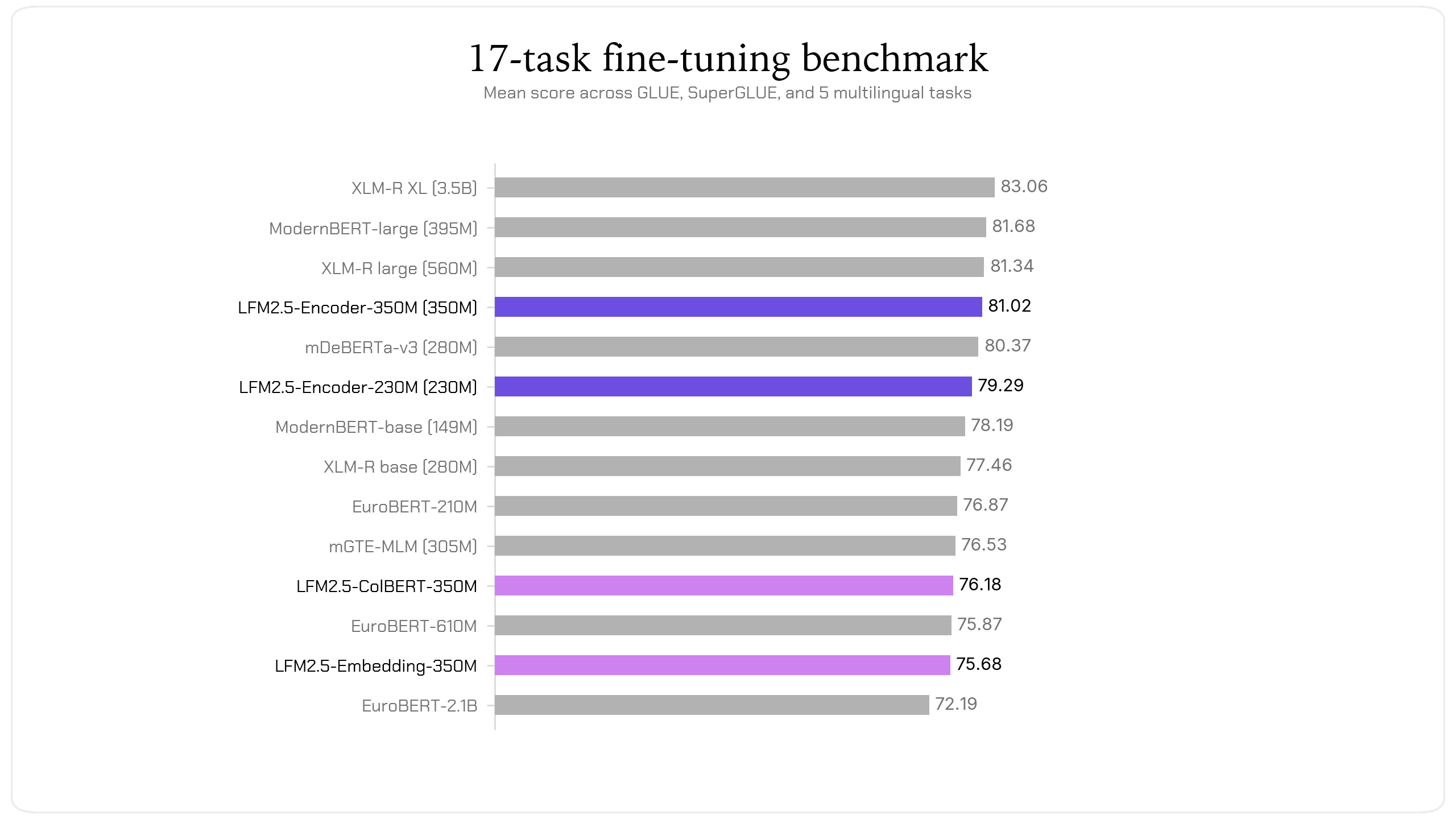
Quick Summary
- Hugging Face introduces LFM2.5-Encoders, a significant advancement enabling rapid and efficient processing of lengthy AI contexts directly on standard CPUs.
- This innovation democratizes advanced natural language processing by removing the heavy reliance on expensive GPU hardware, making powerful AI more accessible.
LFM2.5-Encoders: Unleashing Fast, Long-Context AI Inference on CPUs
The landscape of artificial intelligence is constantly evolving, with large language models (LLMs) and advanced natural language processing (NLP) becoming central to many applications. However, the computational demands of these models, especially when dealing with long input contexts, have traditionally confined their most efficient operation to high-end Graphics Processing Units (GPUs). This dependency creates a significant barrier to entry, both in terms of cost and accessibility. Enter LFM2.5-Encoders from Hugging Face – a groundbreaking development poised to redefine how we approach AI inference, specifically by bringing fast, long-context capabilities directly to Central Processing Units (CPUs).
The Innovation: LFM2.5-Encoders Explained
LFM2.5-Encoders represent a crucial leap forward in AI optimization. Building upon previous generations, this new architecture is meticulously engineered to tackle the inherent challenges of running complex AI models on CPU hardware, particularly when processing extensive textual information. Traditional transformer models often suffer from quadratic complexity with respect to input sequence length, meaning their computational cost skyrockets as context grows. This makes long-context inference on CPUs notoriously slow and memory-intensive.
LFM2.5-Encoders address this by integrating a suite of sophisticated optimizations. While specific architectural details are often proprietary or under active development, such improvements typically involve highly optimized attention mechanisms that approximate full attention more efficiently (e.g., sparse attention, linear attention variants), novel positional encoding schemes that scale better, and deep-level kernel optimizations tailored for CPU instruction sets. Furthermore, advanced quantization techniques (reducing precision of model weights) and efficient memory management strategies likely play a critical role, allowing the models to fit and run swiftly within typical CPU memory constraints without significant performance degradation.
Key Highlights and Features
LFM2.5-Encoders offer several compelling advantages that stand to impact the AI community profoundly:
- CPU-Native High Performance: The most salient feature is their ability to achieve inference speeds comparable to, or even exceeding, some GPU-based solutions for similar tasks, but entirely on standard CPU hardware. This dramatically reduces the need for specialized, costly accelerators.
- Efficient Long-Context Processing: Unlike conventional models that struggle with extended inputs on CPUs, LFM2.5-Encoders are designed to handle lengthy texts (e.g., entire documents, detailed conversations) with remarkable speed and minimal resource overhead.
- Accessibility and Cost-Effectiveness: By shifting the computational burden to CPUs, LFM2.5-Encoders lower the entry barrier for deploying advanced NLP. Developers and organizations can leverage existing CPU infrastructure, reducing hardware investment and operational costs significantly.
- Energy Efficiency: CPUs generally consume less power than high-performance GPUs, making LFM2.5-Encoders a more environmentally friendly option for deploying AI models at scale.
- Democratization of Advanced AI: This innovation opens doors for deploying sophisticated AI capabilities in environments where GPUs are scarce or impractical, such as edge devices, embedded systems, standard cloud instances, or local consumer hardware.
Why This Matters: Impact Analysis
The advent of LFM2.5-Encoders carries far-reaching implications across various sectors. For developers, it means greater flexibility in designing and deploying AI applications, no longer strictly bound by GPU availability. Startups and smaller companies can now access high-performance AI tools without the prohibitive capital expenditure traditionally associated with GPU clusters.
Industries reliant on extensive text analysis, such as legal tech, healthcare (for processing medical records), finance (for market analysis), and customer service (for advanced chatbots and sentiment analysis), stand to benefit immensely. The ability to process long documents quickly and cost-effectively on standard servers transforms the economic viability of many AI-driven solutions.
Moreover, LFM2.5-Encoders accelerate the movement towards more sustainable AI. Reducing reliance on power-hungry GPUs contributes to a smaller carbon footprint for AI operations. It also fosters the growth of edge AI, enabling intelligent applications to run directly on user devices or local servers, enhancing privacy and reducing latency by minimizing data transfer to centralized clouds.
Conclusion and Future Impact
LFM2.5-Encoders from Hugging Face mark a pivotal moment in the quest for accessible and efficient artificial intelligence. By elegantly solving the long-standing challenge of fast, long-context inference on CPUs, they empower a broader range of innovators to build and deploy advanced AI solutions. This breakthrough is not just about raw speed; it's about democratizing cutting-edge technology, reducing environmental impact, and unlocking new frontiers for AI applications where GPU dependency was once an insurmountable hurdle.
As this technology matures and integrates further into the Hugging Face ecosystem and beyond, we can anticipate a surge in novel CPU-centric AI deployments. The future of AI is becoming faster, smarter, and crucially, more inclusive, thanks to innovations like LFM2.5-Encoders.