Unpacking Hybrid AI Models: Where Do They Excel in Token Prediction?
Quick Summary
- Recent advancements in AI research are shedding light on the nuanced strengths of hybrid models, particularly in their ability to predict different types of tokens more effectively.
- This analysis explores how these sophisticated architectures leverage diverse components to achieve superior predictive accuracy across varying linguistic contexts.
Unpacking Hybrid AI Models: Where Do They Excel in Token Prediction?
In the rapidly evolving landscape of artificial intelligence, the quest for more efficient, accurate, and versatile models is ceaseless. A burgeoning area of interest revolves around hybrid AI models – architectures that cleverly combine different computational strategies or components. While monolithic models have achieved impressive feats, researchers are increasingly investigating the granular performance of these hybrid counterparts, particularly asking: Which tokens does a hybrid model predict better? This question, fundamental to understanding and optimizing future AI systems, promises to unlock new levels of predictive precision.
The Architecture of Enhanced Prediction
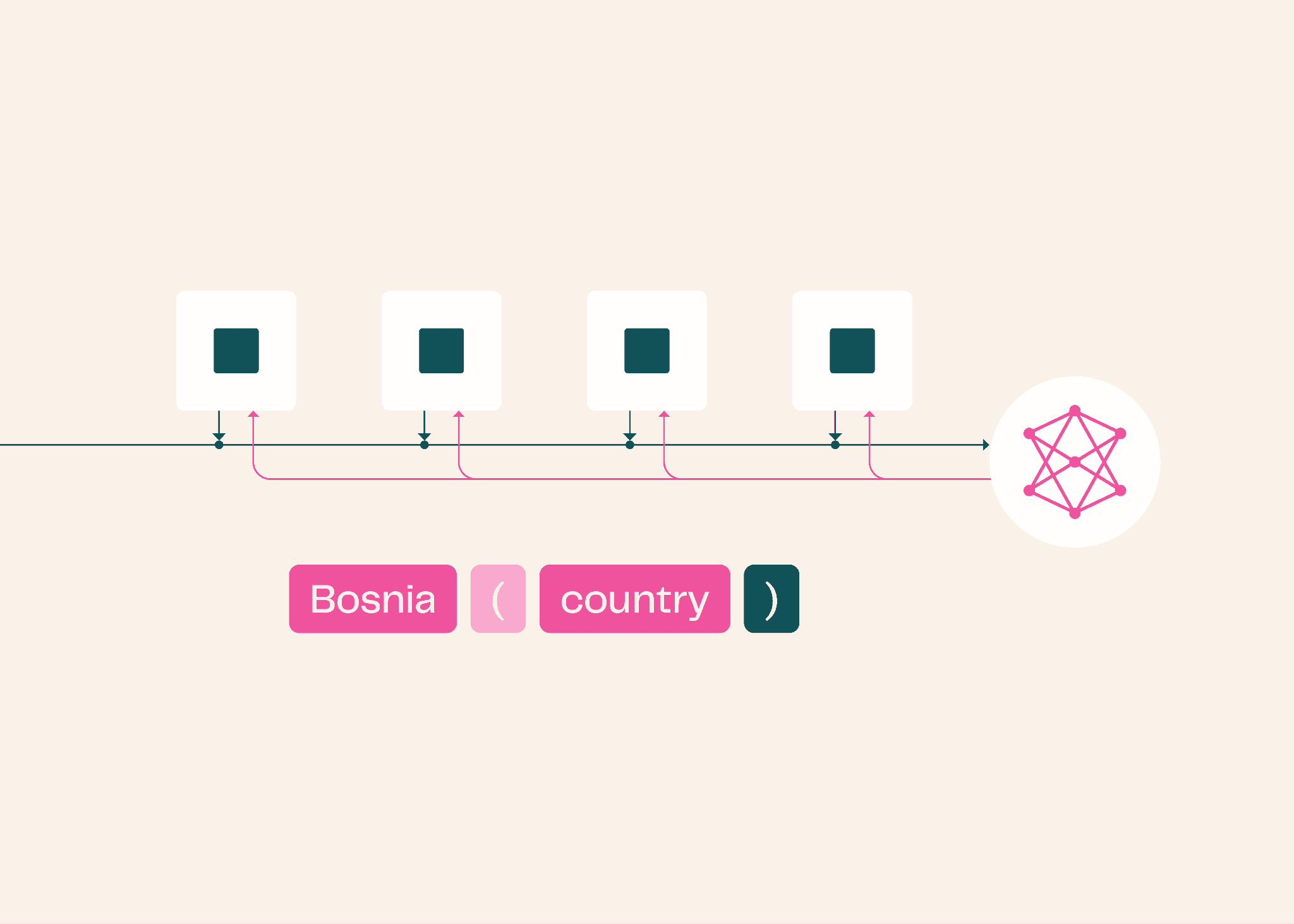
Hugging Face, a leading hub for AI innovation, often highlights research pushing the boundaries of model capabilities. The core insight emerging from studies into hybrid models is their capacity for specialized processing. Unlike a single-strategy model, a hybrid approach might, for instance, combine sparse attention mechanisms for handling long-range dependencies with dense attention for capturing intricate local context. Alternatively, it could integrate different types of neural networks or even leverage distinct embedding strategies for different categories of tokens (e.g., common words, rare entities, punctuation, or syntactic markers).
The advantage lies in this architectural diversity. Rather than applying a 'one-size-fits-all' approach, a hybrid model can dynamically or pre-emptively route specific prediction challenges to the component best suited to handle them. For example, some research suggests that sparse components might excel at identifying and predicting highly frequent, structural tokens (like conjunctions or prepositions) across vast distances, while dense components might be more adept at disambiguating nuanced semantic tokens or predicting rare, domain-specific vocabulary based on immediate context.
Key Highlights and Features
- Adaptive Processing: Hybrid models can dynamically apply different computational strategies based on the input sequence or the token type, leading to more targeted and efficient predictions.
- Contextual Specialization: Different components within the hybrid architecture are hypothesized to specialize in particular types of context or token characteristics. This could mean one part of the model handles long-range semantic coherence, while another focuses on local syntactic accuracy.
- Optimized Resource Allocation: By distributing the prediction task among specialized components, hybrid models can potentially achieve better accuracy with more efficient computational resource utilization than a singular, universally applied strategy.
- Improved Handling of Edge Cases: The combined strength of diverse mechanisms often allows hybrid models to better predict rare tokens, complex linguistic structures, or tokens within highly ambiguous contexts where a single approach might falter.
- Enhanced Interpretability: Understanding which component excels at predicting which tokens offers valuable insights into the model's internal workings, contributing to greater transparency and explainability in AI.
Why This Matters: Impact Analysis
The ability to dissect and understand where a hybrid model truly shines in token prediction has profound implications. For model developers, this knowledge is invaluable for designing next-generation AI architectures. It informs decisions about which components to combine, how to weigh their contributions, and how to optimize their interplay for specific tasks like natural language generation, code completion, or advanced search queries.
Furthermore, for end-users and applications, a model that can predict different tokens with optimized accuracy translates directly into more reliable and sophisticated AI services. Imagine a chatbot that not only understands the general gist of a conversation but can also accurately predict complex entity names or nuanced sentiment markers with superior precision due to its hybrid design. Or a code assistant that not only suggests common programming constructs but also accurately predicts rare library calls or function signatures.
This research paves the way for a more granular understanding of model biases and strengths. By knowing which tokens are better predicted by certain components, we can diagnose issues more effectively, fine-tune models for specific domain expertise, and ultimately build AI systems that are more robust and less prone to errors in critical areas.
Conclusion and Future Impact
The exploration into which tokens hybrid models predict better is more than a technical curiosity; it represents a critical step towards building truly intelligent and efficient AI. As models grow in complexity and scope, the ability to decompose their performance into specialized strengths will be paramount. This line of inquiry, exemplified by the work often shared by platforms like Hugging Face, promises to guide the development of AI that is not only powerful but also precisely engineered for diverse linguistic and computational challenges.
Future research will likely delve deeper into the specific architectural combinations that yield the best results for different token types, exploring novel ways to integrate and orchestrate various AI components. The goal is clear: to move beyond raw performance metrics to a nuanced understanding of how and why models make their predictions, ultimately leading to a new era of finely tuned, context-aware, and highly capable artificial intelligence.