Google Beam Experiment Elevates Hybrid Meetings with Life-Sized Presence
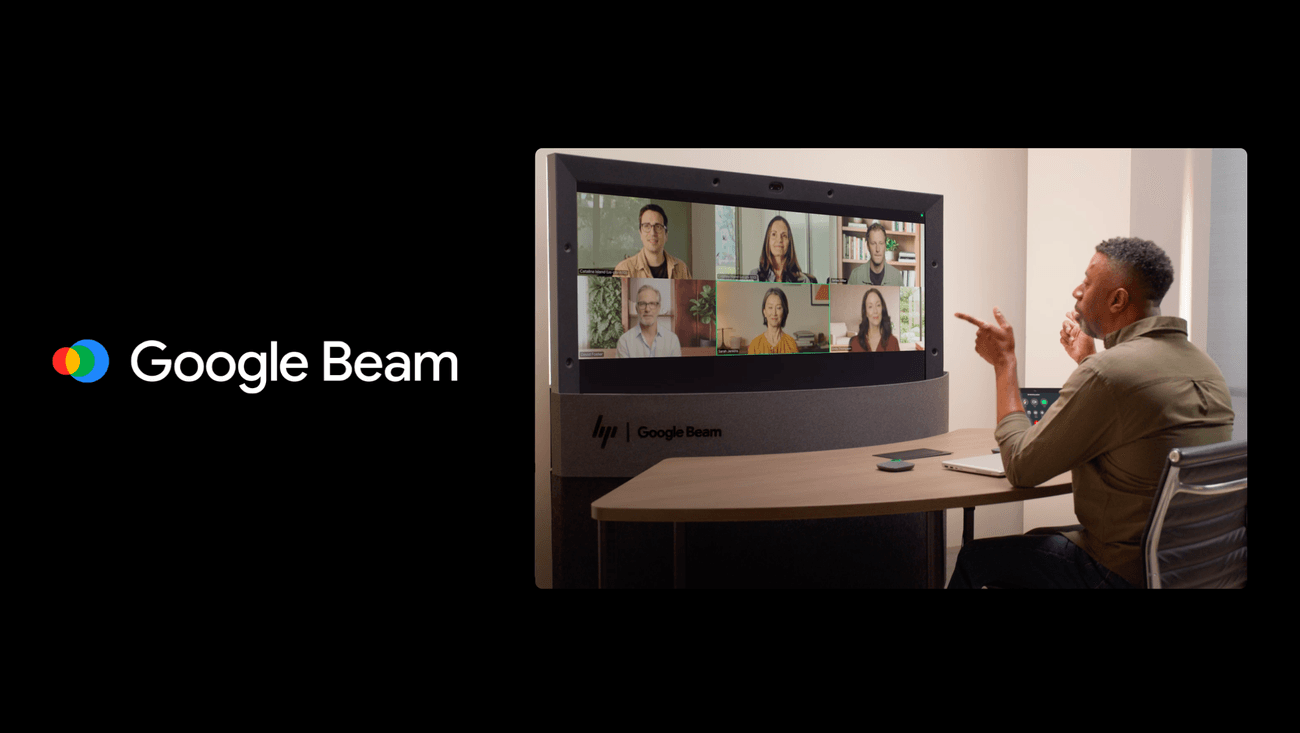
Quick Summary
- Google Beam's latest experiment promises to transform hybrid meetings by presenting remote participants in true-to-life size and sound.
- This innovation aims to foster a deeper sense of connection and inclusivity, making virtual interactions feel as natural as being in the same room.
The transition to hybrid work models has undeniably brought flexibility, but it has also surfaced persistent challenges in fostering truly equitable and engaging meetings. Remote participants often feel like disembodied voices or small faces on a screen, struggling to capture the nuances of in-person interactions. Google is addressing this critical hurdle head-on with an exciting new experiment for its Google Beam telepresence system, aiming to revolutionize hybrid meetings by delivering an unprecedented sense of presence: true-to-life size and sound for every participant.
Google Beam's Immersive Leap: True-to-Life Presence
Google Beam, a sophisticated telepresence solution, has always strived to bridge geographical distances with advanced communication. Now, this latest experimental iteration pushes the boundaries of immersive collaboration. The core innovation lies in its ability to render remote colleagues not just as video feeds, but as life-sized, spatially accurate representations. This isn't merely about a bigger screen; it's about recreating the subtle dynamics of a shared physical space.
To achieve this, the experiment likely leverages a combination of cutting-edge technologies. High-resolution, large-format displays are crucial for projecting participants at their actual human scale, ensuring that every gesture, facial expression, and body language cue is clearly visible. Coupled with this is advanced spatial audio, which projects voices from the precise location of the on-screen representation, mimicking how sound travels in a physical room. This means if a colleague appears on the left side of the Beam display, their voice will emanate from that direction, creating a more intuitive and natural auditory experience. AI processing likely plays a significant role in optimizing video quality, stitching together multiple camera feeds for a seamless view, and ensuring real-time rendering with minimal latency, crucial for maintaining the illusion of presence.
Key Highlights and Transformative Features
This experimental upgrade to Google Beam brings several compelling features designed to transform the meeting experience:
- Life-Sized Participant Representation: Remote attendees are displayed at their actual human scale, making interactions feel far more personal and immediate than typical video calls.
- Immersive Spatial Audio: Voices are positioned precisely to match the visual location of each speaker, enhancing clarity and making it easier to follow conversations naturally.
- Enhanced Non-Verbal Communication: By seeing colleagues in full scale, subtle non-verbal cues – a nod, a shift in posture, a hand gesture – become more discernible, enriching understanding and connection.
- Reduced Cognitive Load: The natural presentation of participants and audio reduces the mental effort required to interpret interactions, combating "Zoom fatigue" and fostering more focused engagement.
- Fostering a Sense of Shared Space: The combined visual and auditory realism creates an illusion of a shared meeting room, dissolving the digital divide and making hybrid interactions feel genuinely inclusive.
Why This Matters for the Future of Work
In a world increasingly reliant on distributed teams and flexible work arrangements, the quality of remote collaboration is paramount. This Google Beam experiment matters because it directly addresses one of the most persistent frustrations of hybrid work: the feeling of disconnect.
By delivering true-to-life presence, Google Beam significantly elevates meeting equity. Remote participants are no longer relegated to secondary status; they become integral, naturally integrated members of the conversation. This can lead to more dynamic discussions, improved decision-making, and a stronger sense of team cohesion. When individuals feel genuinely seen and heard, their engagement and contributions naturally increase. For organizations, this translates into higher productivity, better knowledge sharing, and a more inclusive company culture that retains top talent regardless of their physical location. Furthermore, this advancement positions Google at the forefront of the immersive collaboration technology race, pushing the boundaries of what's possible in the future of work. It moves beyond simple video conferencing towards a truly immersive, human-centric interaction paradigm.
Conclusion: A Glimpse into Seamless Collaboration
Google Beam's latest experiment represents a significant leap forward in telepresence technology. By prioritizing true-to-life size and sound, Google is not just refining a tool; it's redefining the very nature of remote interaction. While still in its experimental phase, this development offers a compelling glimpse into a future where geographical barriers diminish, and collaborative experiences become virtually indistinguishable from in-person meetings. As hybrid work continues to evolve, innovations like Google Beam will be critical in ensuring that connectivity means genuine presence, fostering stronger teams and more impactful collaborations across any distance. This commitment to human-centric design in advanced AI and communication technologies promises a more connected, inclusive, and productive global workforce.