OpenAI Codex Revolutionizes Data Science Documentation and Reporting
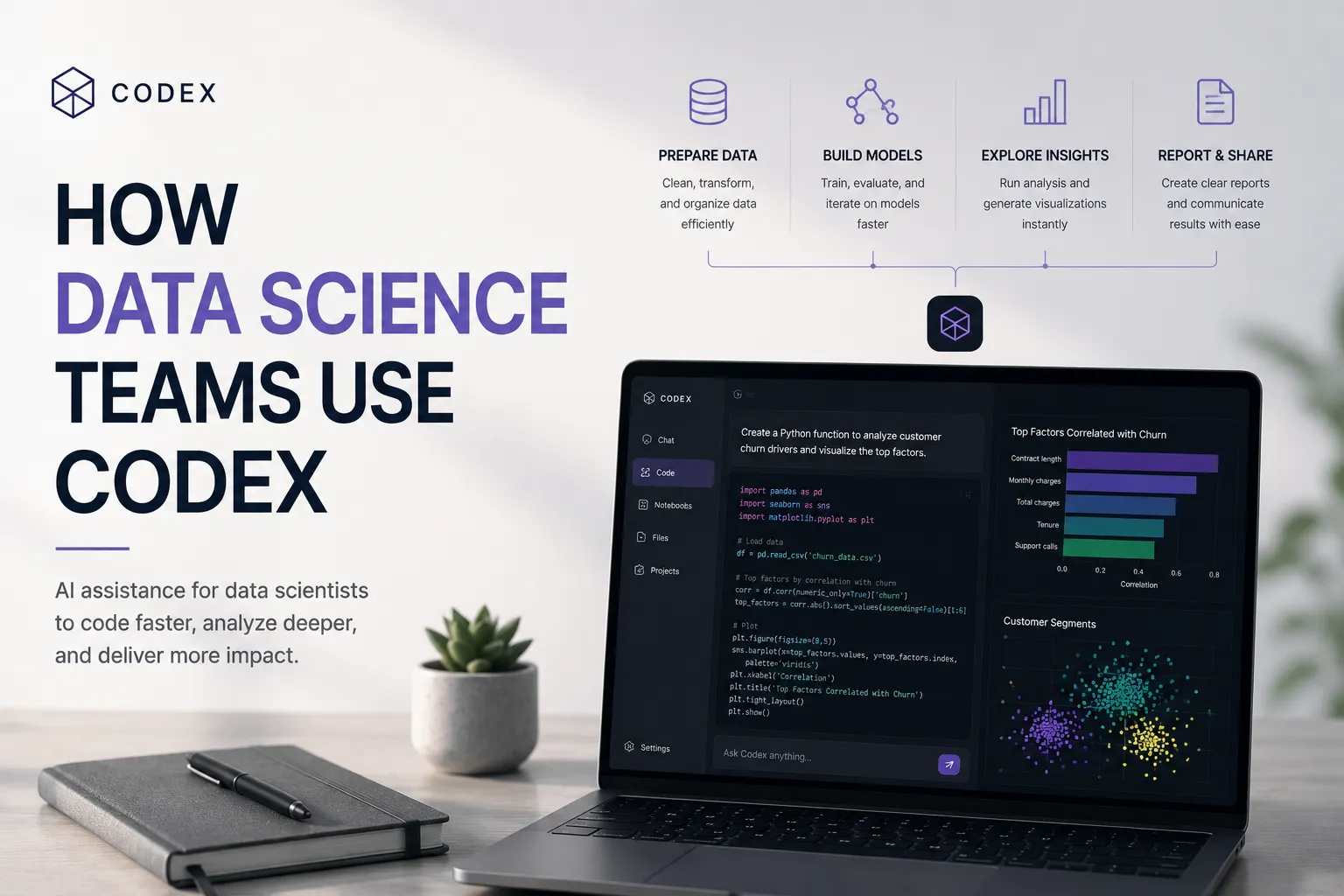
Quick Summary
- OpenAI's Codex is transforming how data science teams generate critical reports and documents.
- By automating the creation of root-cause briefs, impact readouts, and KPI memos from raw inputs, Codex significantly boosts efficiency and accuracy in analytical workflows.
OpenAI Codex: Empowering Data Science Teams with Automated Documentation
In the rapidly evolving world of data science, professionals often find themselves caught between rigorous analysis and the demanding task of communicating their findings effectively. Producing clear, concise, and comprehensive documentation—from detailed technical briefs to high-level impact summaries—can consume a significant portion of a data scientist's valuable time. This is where OpenAI's Codex steps in, poised to redefine efficiency and communication within data science teams.
Unlocking New Efficiencies: Codex's Role in Data Science Workflows
OpenAI's Codex, known primarily for its ability to translate natural language into code, is now extending its remarkable capabilities to automate the generation of critical data science documentation. Drawing upon its deep understanding of both programming constructs and natural language, Codex can ingest various 'real work inputs'—ranging from raw data analysis outputs, code snippets, database schemas, and analytical results to unstructured notes and stakeholder requirements. From these diverse inputs, it intelligently constructs structured, professional-grade documents.
This isn't merely a coding assistant; it's a powerful tool for knowledge synthesis and communication. By leveraging Codex, data science teams can significantly reduce the manual effort involved in report writing, allowing them to focus more on complex problem-solving and strategic insights rather than repetitive documentation tasks. It fundamentally changes the pipeline from analysis to actionable intelligence, making it faster and more consistent.
Key Capabilities: Transforming Raw Inputs into Actionable Documents
Codex's application within data science is broad, automating the creation of several crucial document types:
- Root-Cause Briefs: When anomalies or unexpected trends emerge, data scientists must quickly identify their underlying causes. Codex can process analytical findings, logs, and data patterns to automatically generate comprehensive root-cause briefs, outlining potential drivers, evidence, and initial hypotheses with remarkable speed and accuracy.
- Impact Readouts: Quantifying the business impact of a data science project is paramount for demonstrating value. Codex can synthesize project outcomes, key metrics, and financial implications from various reports and data points to construct clear, compelling impact readouts that resonate with business stakeholders.
- KPI Memos: Regularly reporting on Key Performance Indicators (KPIs) is a standard practice. Codex can automate the creation of KPI memos, highlighting performance trends, identifying deviations, and even suggesting areas for further investigation based on the latest data inputs.
- Scoped Analyses: Before diving deep into a project, defining its scope, methodology, and data requirements is essential. Codex can assist in drafting scoped analyses, translating initial project briefs and stakeholder requirements into structured documents that outline the analytical approach, data sources, and expected deliverables.
- Dashboard Specs: Designing effective dashboards requires clear technical specifications. Codex can generate detailed dashboard specifications from desired business outcomes, data availability, and user interaction requirements, ensuring that development teams have a precise blueprint for implementation.
Why This Matters: Impact Analysis for Data-Driven Organizations
The integration of Codex into data science workflows offers several profound benefits:
- Enhanced Efficiency & Productivity: Freeing data scientists from time-consuming documentation allows them to dedicate more resources to actual analysis, model building, and innovation.
- Improved Accuracy & Consistency: Automated generation reduces the risk of human error, ensuring reports are consistent in format, terminology, and data representation across the organization.
- Streamlined Communication: Bridging the gap between highly technical findings and accessible business language, Codex helps foster better understanding and collaboration between data science teams and non-technical stakeholders.
- Faster Time-to-Insight: By accelerating the documentation process, organizations can derive actionable insights from their data more quickly, leading to faster decision-making and a more agile business strategy.
- Scalability of Expertise: Enables smaller teams to produce a larger volume of high-quality documentation, effectively scaling their analytical impact without proportional increases in manual effort.
Conclusion: The Future of Augmented Data Science
OpenAI's Codex represents a significant leap forward in augmenting human intelligence within data science. It transforms the often-tedious task of documentation into an automated, efficient, and highly accurate process. As AI continues to evolve, we can anticipate even more sophisticated integrations, allowing data scientists to focus on the 'why' and 'how' of analysis, while AI handles the 'what' of communication and reporting.
This shift empowers data professionals to deliver insights with unprecedented speed and clarity, positioning AI not as a replacement, but as an indispensable partner in navigating the complexities of the data-driven world. The future of data science is undoubtedly one where human creativity and AI-powered automation work in concert to unlock exponential value.