OpenAI's Codex: Revolutionizing Business Operations with AI-Powered Documentation
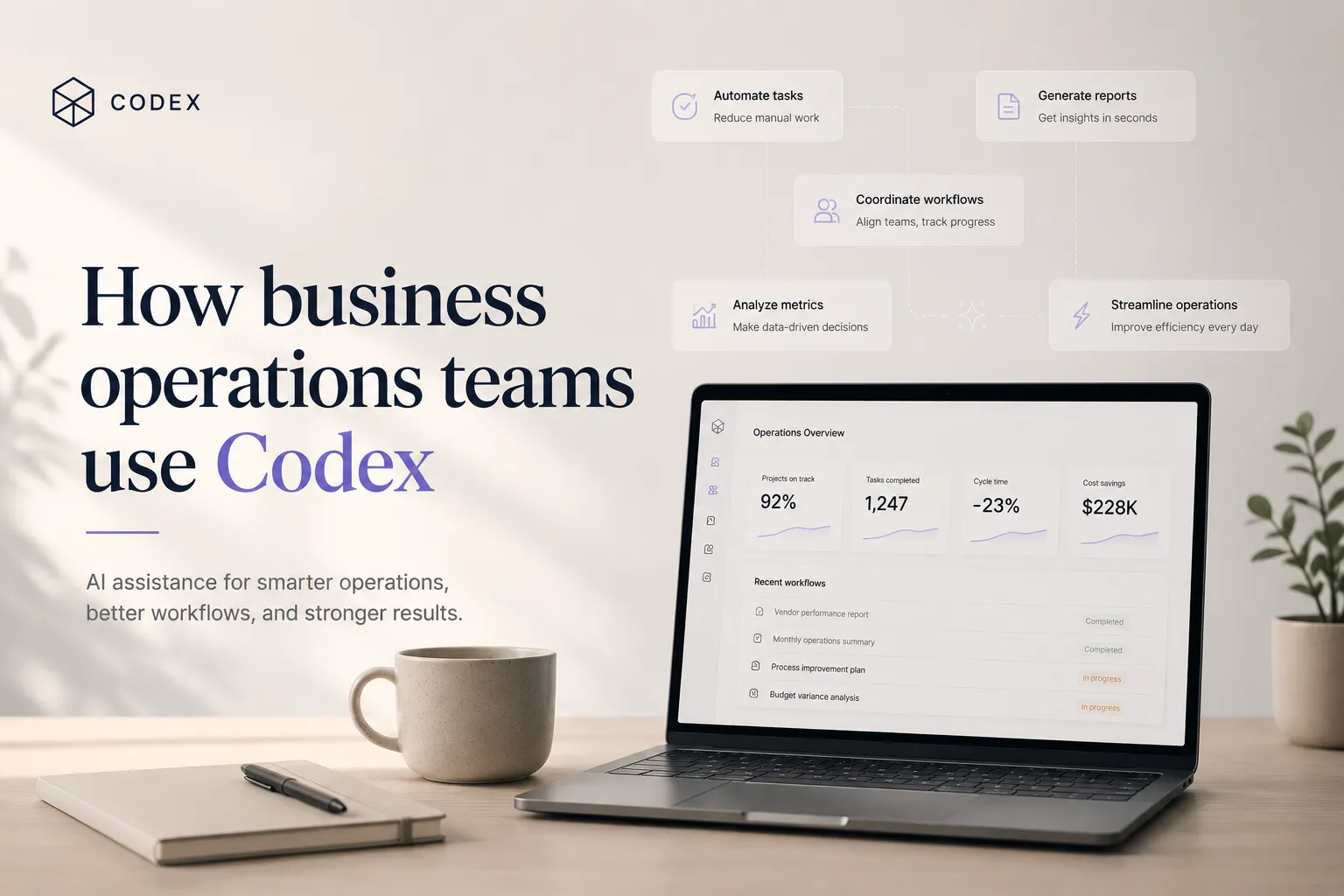
Quick Summary
- OpenAI's Codex is redefining efficiency for business operations teams.
- This AI model streamlines the creation of critical documents like strategy updates and leadership briefs, transforming raw data into polished, structured reports.
- Discover how Codex empowers teams to focus on strategic insights rather than manual report generation.
In the dynamic world of modern business, operations teams are the unsung heroes, constantly sifting through vast amounts of data and information to keep the organizational machinery running smoothly. Their critical task often involves distilling complex project updates, strategic initiatives, and performance metrics into coherent, actionable documents for leadership and stakeholders. This labor-intensive process, however, is on the cusp of a profound transformation, thanks to advancements in artificial intelligence. OpenAI's Codex, a sophisticated AI model initially celebrated for its prowess in generating code from natural language, is now proving to be an indispensable co-pilot in business operations, revolutionizing the way critical documentation is created.
Main Update: AI-Powered Document Synthesis for Business Ops
At its core, Codex for business operations acts as an intelligent translator, converting raw, unstructured "real work inputs" into polished, professional documents with remarkable speed and accuracy. Imagine the typical deluge of information an operations team encounters daily: disparate meeting notes, fragmented project plans, performance spreadsheets, email threads, and various data points scattered across different platforms. Instead of manually sifting through these, extracting relevant information, and meticulously crafting reports, teams can leverage Codex.
The AI model understands natural language contextually, allowing it to process diverse inputs and synthesize them into structured outputs. This means a project manager could feed Codex a collection of raw data points, stakeholder feedback, and internal discussion transcripts, and the AI could generate a comprehensive "initiative brief" outlining goals, scope, resources, and expected outcomes. Similarly, it can compile "strategy updates" that succinctly summarize progress against objectives, identify challenges, and propose next steps, or construct detailed "leadership decision packets" complete with executive summaries, options analyses, and data-backed recommendations – all derived from the team's ongoing work.
Key Highlights and Features
The application of Codex in business operations brings forth several transformative capabilities:
- Automated Document Generation: Converts raw, unstructured data and text into structured, professional documents like briefs, updates, and reports with minimal human intervention.
- Contextual Understanding and Synthesis: Processes complex narratives, project notes, and performance data, intelligently extracting key insights and synthesizing them into coherent summaries.
- Versatile Output Formats: Adapts to the specific requirements of various operational documents, from concise progress updates to detailed strategic analyses and leadership presentations.
- Enhanced Consistency and Standardization: Ensures a uniform style, tone, and format across all generated documents, improving clarity and professional presentation.
- Significant Efficiency Boost: Drastically reduces the time and effort traditionally spent on manual drafting, editing, and formatting of reports, freeing up operational personnel.
- Data-Driven Narrative Creation: Transforms numerical data and qualitative observations into compelling, easy-to-understand narratives for diverse audiences.
Why This Matters: Impact Analysis
The implications of integrating Codex into business operations workflows are far-reaching, promising not just incremental improvements but a fundamental shift in how teams function:
- Elevated Productivity and Strategic Focus: By automating the time-consuming aspects of document creation, operations professionals can dedicate more mental energy to strategic planning, problem-solving, and value-added initiatives rather than administrative tasks. This enables them to transition from mere reporters to genuine strategic partners within the organization.
- Accelerated and Improved Decision-Making: Leadership gains faster access to meticulously prepared, consistent, and data-backed reports. This expedited information flow allows for more agile and informed decision-making, crucial in today's fast-paced business environment.
- Enhanced Organizational Communication: Standardized and clearly articulated documents reduce ambiguity, ensuring all stakeholders are on the same page regarding project status, strategic direction, and operational performance. This fosters better collaboration and alignment across departments.
- Democratization of Data Insights: Codex makes complex data more accessible and digestible, empowering more individuals within an organization to understand and act upon crucial business intelligence without needing specialized reporting skills.
- Reduced Human Error and Increased Reliability: The AI’s ability to meticulously process and synthesize information minimizes the potential for human error in data transcription, calculation, and document formatting, leading to more reliable and trustworthy reports.
- Scalability and Adaptability: As business needs evolve, Codex can adapt to generate new types of documents or incorporate new data sources, offering a scalable solution for growing organizations.
Conclusion and Future Impact
OpenAI's Codex represents a significant leap forward in empowering business operations teams, demonstrating AI's capacity to transcend traditional coding applications and profoundly impact everyday administrative and strategic tasks. This isn't merely about automating report writing; it's about providing an intelligent assistant that amplifies human capabilities, allowing professionals to focus on the nuanced, creative, and critical thinking aspects of their roles.
Looking ahead, we can anticipate even deeper integration of AI into operational workflows, potentially leading to predictive analytics embedded directly into reports, personalized summaries for different stakeholders, and proactive identification of potential operational bottlenecks. The future of business operations will likely feature a seamless synergy between human expertise and AI efficiency, where tools like Codex serve as indispensable partners, driving productivity, fostering innovation, and ultimately, shaping more responsive, intelligent, and successful enterprises. This intelligent partnership is set to redefine operational excellence for years to come.