Demystifying Model Routing: The Unseen Complexity in AI Deployment
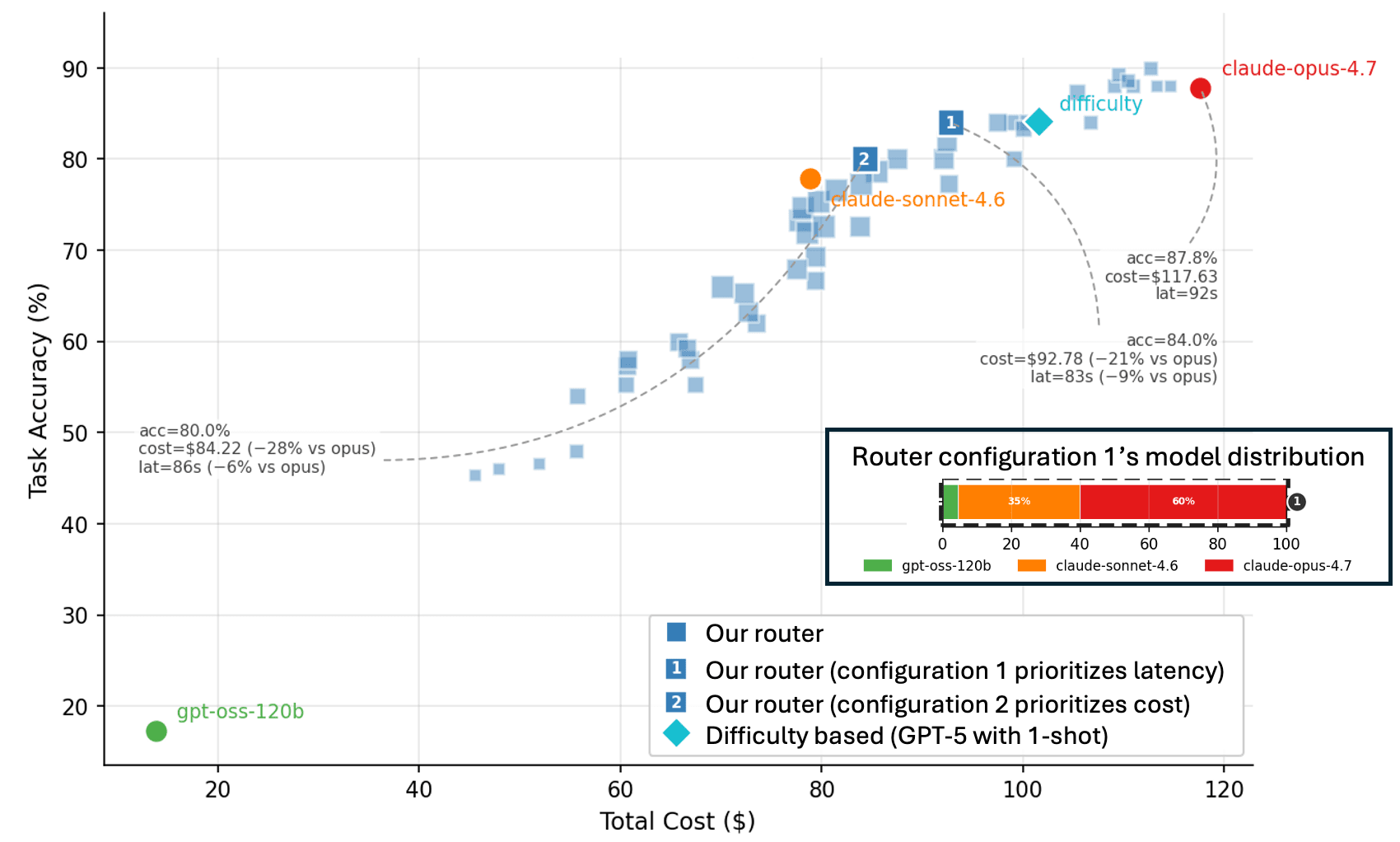
Quick Summary
- Model routing, seemingly simple in theory, becomes a critical and complex challenge in real-world AI deployments.
- This deep dive explores how orchestrating multiple AI models efficiently impacts performance, cost, and user experience, highlighting Hugging Face's role in navigating these complexities.
AI models have transformed industries, yet the journey from a trained model to a robust, production-ready application is fraught with challenges. One such challenge, often underestimated, is model routing. What appears deceptively simple at first—directing an incoming request to the right AI model—quickly evolves into a sophisticated orchestration task as systems scale and user demands grow. In an era where diverse models from sources like Hugging Face offer varying capabilities, costs, and performance profiles, mastering model routing is no longer a luxury but a strategic imperative for efficient and effective AI deployment.
The Hidden Depths: Why Model Routing Gets Complex
The premise, "Model Routing Is Simple. Until It Isn’t," perfectly encapsulates the journey of many machine learning engineers. Initially, deploying a single model for a specific task seems straightforward: a request comes in, it hits the model, and an inference is returned. But as soon as an organization needs to handle multiple tasks, support different user segments, or optimize for varying metrics (e.g., speed vs. accuracy vs. cost), this simplicity shatters.
The core of this complexity lies in dynamic model selection. Modern AI systems often require the ability to:
- Choose from a spectrum of models: A large language model (LLM) might be excellent for complex queries but overkill for simple ones. Smaller, faster, and cheaper models could handle a significant portion of traffic, leaving the heavy lifting to larger models only when truly needed.
- Adapt to context: The user's prompt, historical data, language, or even the time of day might dictate which model is most appropriate.
- Manage versions and experiments: Continuously improving models means A/B testing new versions, performing canary deployments, and rolling back if issues arise, all while routing traffic intelligently.
- Optimize resource utilization: Different models have specific hardware requirements. Efficient routing ensures requests are sent to models running on the most suitable and available compute resources.
Hugging Face, as a central hub for countless pre-trained models and a leader in MLOps tools, plays a crucial role in highlighting these challenges and providing foundational solutions. Their ecosystem, including the transformers library's AutoClasses and their Inference Endpoints, empowers developers to build systems that can dynamically load and swap models, setting the stage for advanced routing strategies.
Key Capabilities of Effective Model Routing
Effective model routing systems embody several key capabilities that extend far beyond basic load balancing:
- Intelligent Model Selection: Automatically directs requests to the most appropriate model based on predefined rules, machine learning classifiers, or even semantic understanding of the input. This could involve choosing a smaller, fine-tuned model for domain-specific tasks or a general-purpose foundation model for broad queries.
- Cost Optimization: By judiciously routing requests to models with varying computational costs (e.g., smaller, cheaper models for simple tasks), organizations can significantly reduce their inference expenses without sacrificing overall quality.
- Performance Enhancement: Routing can minimize latency by sending requests to models that are faster, located closer to the user, or have available capacity. It also allows for higher throughput by distributing load across multiple models or instances.
- Seamless A/B Testing & Canary Deployments: Safely introduce new model versions by routing a small percentage of traffic to them, monitoring performance, and gradually increasing exposure. This enables continuous improvement with minimal risk.
- Scalability and Reliability: Distributes requests efficiently across a fleet of models, ensuring high availability and robust performance even under heavy load. If one model instance fails, traffic can be rerouted.
- Dynamic Model Loading/Unloading: Depending on demand, models can be loaded into memory or scaled down, further optimizing resource utilization and cost, especially for long-tail models.
Why This Matters: Impact on AI Deployment and Innovation
The ability to implement sophisticated model routing profoundly impacts various facets of AI deployment:
- For Businesses: Directly translates into significant cost savings on inference infrastructure, improved user experiences through faster and more accurate responses, and the agility to deploy new AI capabilities rapidly. It enables businesses to achieve more with their AI investments by making AI applications more efficient and responsive.
- For Developers and ML Engineers: Simplifies the complexity of managing a diverse model portfolio. Instead of hard-coding model choices, engineers can define intelligent routing policies, freeing them to focus on model development and iteration. It shifts the paradigm from "deploying a model" to "deploying an intelligent system of models."
- For the AI Ecosystem: Fosters innovation by making it easier to experiment with and integrate a wider array of specialized models. It accelerates the adoption of advanced architectures like Mixture-of-Experts (MoE) by providing the necessary infrastructure for effective orchestration. This ultimately drives towards more adaptable, context-aware, and performant AI applications.
Conclusion: The Future is Intelligently Routed
What begins as a seemingly simple task of directing requests to an AI model quickly blossoms into a critical engineering discipline essential for robust, scalable, and cost-effective AI deployments. As the AI landscape continues to evolve with an ever-growing array of specialized, multi-modal, and foundational models, the importance of intelligent model routing will only amplify. Future advancements will likely see routing mechanisms becoming even more sophisticated, perhaps leveraging AI itself to dynamically optimize model selection based on real-time performance metrics, user feedback, and evolving business objectives. Mastering model routing today is paramount for organizations aiming to unlock the full potential of their AI investments and navigate the complex, dynamic future of artificial intelligence.