The Next Frontier: Why AI Agent Logic is Crucial for Scalable Enterprise Adoption
Quick Summary
- While Large Language Models have captivated the world, their standalone capabilities often fall short for complex enterprise needs.
- This article explores why the integration of sophisticated AI agent logic is the true key to unlocking scalable, autonomous, and truly transformative AI adoption across businesses.
The Next Frontier: Why AI Agent Logic is Crucial for Scalable Enterprise Adoption
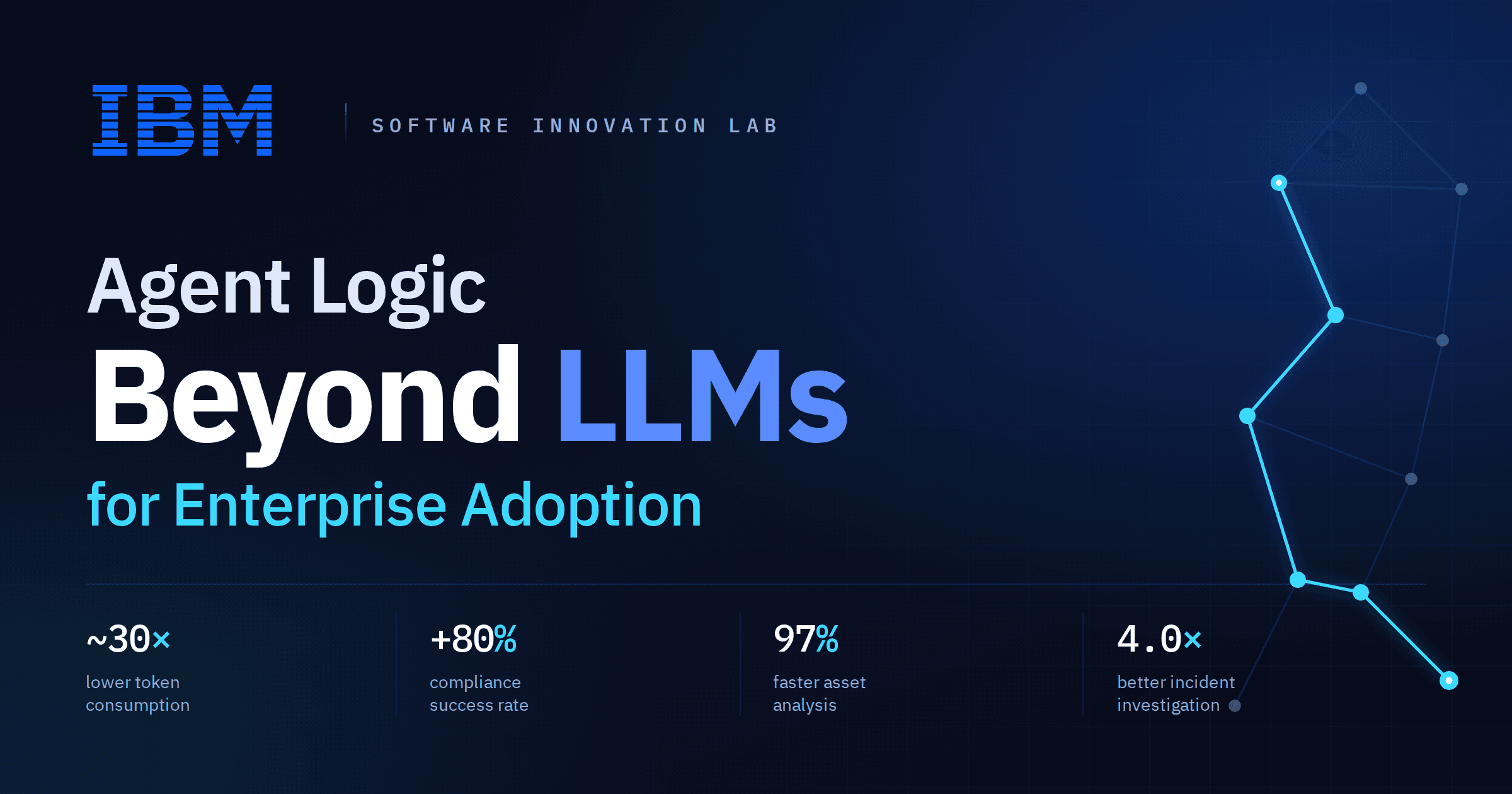
The artificial intelligence landscape is buzzing with the transformative power of Large Language Models (LLMs). From generating creative content to answering complex queries, LLMs like GPT-4 and Llama have demonstrated incredible potential, captivating both the public and enterprises alike. However, for businesses aiming to integrate AI at scale, moving beyond mere conversational abilities to truly automate and optimize critical, multi-step business processes, a new paradigm is emerging: AI agent logic. The future of scalable enterprise AI isn't just about bigger models; it's about smarter, more autonomous agents.
Moving Beyond Standalone LLMs: The Rise of Agent Logic
While LLMs are undeniably powerful pattern matchers and text generators, their inherent limitations become apparent when faced with the demands of complex, real-world enterprise tasks. They often lack persistent memory, struggle with multi-step reasoning, and cannot natively interact with external tools or data sources. This is where AI agent logic steps in, offering a robust framework to imbue AI systems with greater autonomy and problem-solving capabilities.
At its core, AI agent logic refers to the architectural frameworks and reasoning capabilities that allow an AI system to go beyond simple input-output responses. Unlike a standalone LLM, which primarily acts as a sophisticated text predictor, an AI agent is designed to perceive its environment, plan actions, execute tasks, and learn from outcomes. This involves incorporating several critical components:
- Reasoning Engine: Allows the agent to break down complex problems into manageable sub-tasks and determine the best course of action.
- Memory Module: Enables the agent to retain context, past experiences, and learned knowledge over extended interactions and sessions.
- Tool-Use Capabilities: Crucially, agents can interact with external systems, databases, APIs, and specialized models, essentially acting as a digital 'employee' with access to all necessary enterprise tools.
- Feedback Loops & Self-Correction: Allowing for iterative improvement and dynamic adaptation based on real-world interactions and unexpected outcomes.
Key Highlights of AI Agent Logic for Enterprise
Integrating AI agent logic transforms AI from a powerful assistant into an autonomous, proactive problem-solver. Here are the defining features:
- Autonomous Decision-Making: Agents can independently assess situations, make choices based on defined goals, and execute tasks without constant human oversight.
- Advanced Problem-Solving: Capable of tackling multi-step, complex problems by decomposing them, orchestrating various tools, and synthesizing information.
- Seamless Integration with Enterprise Systems: Agents can effortlessly connect and interact with CRMs, ERPs, supply chain management systems, financial platforms, and other internal tools via robust APIs.
- Contextual Memory & Learning: Agents maintain a persistent state and learn from ongoing interactions, adapting their behavior and strategies over time to improve performance.
- Resilience and Self-Correction: Equipped to handle unexpected situations, errors, and adapt their plans dynamically, minimizing disruptions and human intervention.
- Workflow Orchestration: Agents can be designed for specific roles (e.g., a 'finance agent,' 'customer support agent,' or 'logistics agent') and coordinate with other agents to complete end-to-end, complex business workflows.
Why This Matters: Unlocking True Enterprise AI Transformation
The shift towards AI agent logic is not just an incremental improvement; it's a fundamental change in how enterprises can leverage AI. It signifies a profound leap from experimental AI applications to robust, scalable, and mission-critical automation:
- Unlocking True Automation: Moving beyond generative text tasks to fully automating entire business processes, from personalized customer journey management and proactive supply chain optimization to sophisticated fraud detection and automated report generation.
- Scalability & Robustness: Standalone LLMs can struggle with consistency, hallucination, and maintaining context over long, complex interactions. Agents, with their structured reasoning, memory, and error-handling capabilities, offer a far more robust and scalable solution for critical business applications.
- Enhanced Efficiency & Measurable ROI: By orchestrating multiple tools, decision points, and data sources, agents can significantly reduce manual effort, speed up operations, and deliver measurable return on investment across various departments.
- Addressing Real-World Complexity: Enterprise challenges rarely fit into neat, single-query boxes. They are interconnected, dynamic, and often ambiguous. Agents provide the necessary framework to tackle the messiness and interconnectedness of real-world business problems.
- Democratizing AI Development: Frameworks for building agents can empower developers to create sophisticated AI solutions without needing deep expertise in every underlying model, leveraging existing LLMs as powerful 'brains' within a larger intelligent system.
Conclusion: The Path to Autonomous Enterprises
The journey 'beyond LLMs' to embracing AI agent logic marks the next significant milestone in enterprise AI adoption. It signifies a crucial evolution from reactive, prompt-based interactions to proactive, autonomous systems capable of executing complex, end-to-end tasks with minimal human oversight. For businesses ready to move past the experimental phase of AI and into true operational integration and scaled impact, investing in agent frameworks and understanding agentic AI principles will be paramount.
This evolution promises not just unprecedented efficiency gains but a fundamental rethinking of how work is done, paving the way for truly intelligent, adaptive, and autonomous enterprises of the future. The era of the AI agent is here, and it's poised to redefine the capabilities of business AI.