Agentic AI Transforms Scientific Computing: Unlocking a New Era of Discovery
Quick Summary
- Agentic AI is revolutionizing scientific computing, enabling researchers to accelerate software development and discovery.
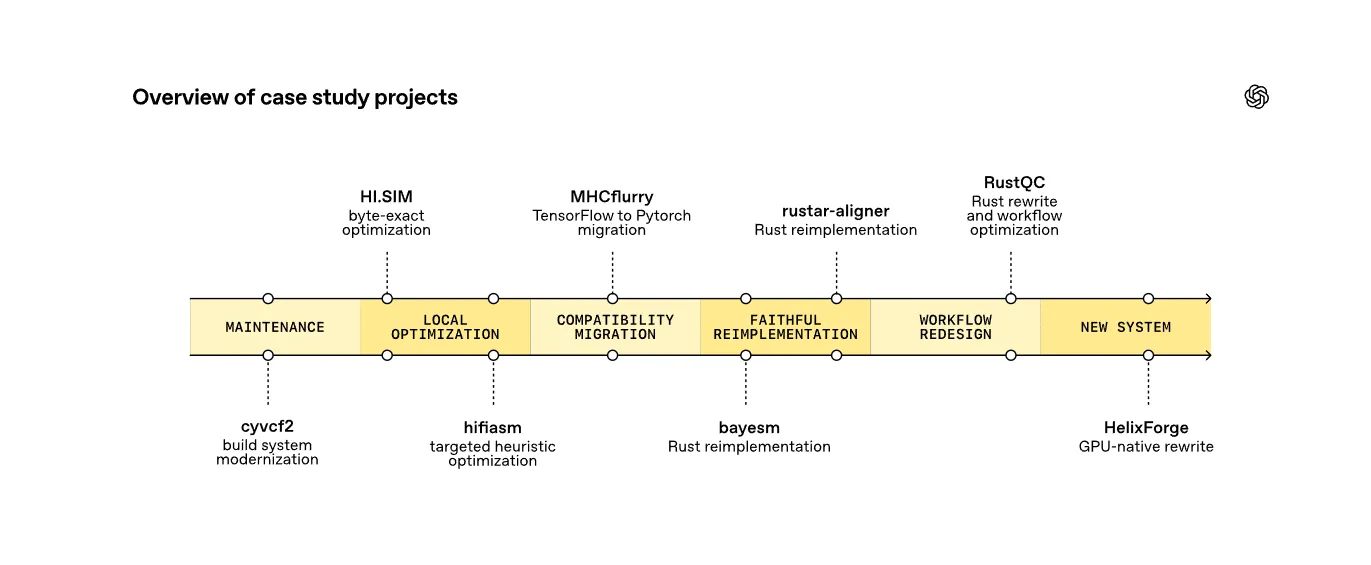
- A recent field report highlights how these intelligent coding agents are modernizing research in genomics and beyond, promising an unprecedented era of breakthroughs.
In the relentless pursuit of scientific breakthroughs, the pace of discovery often hinges on the efficiency of our tools. For decades, scientific computing has been the engine behind progress in fields from genomics to astrophysics, yet it remains a complex, time-consuming endeavor. Enter agentic AI – a revolutionary paradigm that promises to fundamentally reshape how scientists develop software, analyze data, and ultimately, make discoveries. This emerging technology is not just assisting; it's actively participating, ushering in an unprecedented era of accelerated innovation.
Agentic AI: Modernizing the Scientific Lab
Recent observations and field reports, particularly highlighted by entities like OpenAI, confirm a pivotal shift: scientists are increasingly leveraging AI coding agents to modernize the very fabric of scientific computing. Unlike traditional AI tools that merely generate code snippets or automate simple tasks, agentic AI systems are designed for greater autonomy. These intelligent agents can understand complex problems, formulate plans, generate robust code, debug issues, test solutions, and iterate – all with minimal human oversight. This sophisticated capability allows researchers to offload significant portions of the software development lifecycle, from creating custom data analysis pipelines to building complex simulation environments. The impact is profound: what once took weeks or months of specialized human effort can now be achieved in a fraction of the time, freeing up scientists to focus on higher-level problem-solving and interpretation rather than the intricacies of coding.
Key Capabilities and Highlights
The integration of agentic AI into scientific workflows brings several transformative advantages:
- Accelerated Software Development: Agents can rapidly prototype, generate, and refine code for specific scientific tasks, drastically reducing development cycles for algorithms, simulations, and data processing tools.
- Enhanced Code Quality and Reliability: By autonomously identifying and rectifying errors, and adhering to best practices, AI agents contribute to more robust, efficient, and maintainable scientific software.
- Democratization of Advanced Computing: Researchers who may lack deep software engineering expertise can now access and deploy sophisticated computational methods through intuitive agent interfaces, broadening the scope of scientific inquiry.
- Rapid Experimentation and Iteration: Scientists can quickly test hypotheses and explore different computational models by instructing agents to generate and modify code on the fly, accelerating the experimental phase of research.
- Bridging Disciplinary Gaps: Agents can translate domain-specific scientific problems into executable code, fostering better collaboration between scientists from diverse fields and computational experts.
- Revolutionizing Genomics and Beyond: In genomics, for instance, agents are accelerating the development of tools for sequence analysis, variant calling, and gene editing simulations, leading to faster insights into biological mechanisms and potential therapies. Their utility extends across material science, climate modeling, drug discovery, and fundamental physics.
Why This Matters: The Impact on Discovery and Innovation
The implications of agentic AI in scientific computing extend far beyond mere efficiency gains. This shift represents a fundamental reshaping of the scientific discovery process itself. Faster development cycles mean quicker iteration of hypotheses and experiments, leading to an exponential acceleration of scientific breakthroughs. Fields grappling with vast datasets and complex simulations, like personalized medicine, astrophysics, and environmental science, stand to gain immensely. Economically, this could translate into reduced R&D costs for industries relying on scientific innovation, bringing life-saving drugs to market faster or developing sustainable technologies more rapidly. More broadly, agentic AI fosters a new paradigm of human-AI collaboration where scientists are elevated from tedious coding tasks to roles focused on strategic thinking, experimental design, and critical data interpretation. This partnership is crucial for tackling humanity's most pressing challenges, from understanding complex diseases to designing sustainable energy solutions.
Conclusion: A Future of Accelerated Scientific Progress
The advent of agentic AI marks a defining moment for scientific computing. What began as an aid for simple tasks has evolved into an autonomous partner capable of accelerating the most intricate aspects of software development and discovery. While the full extent of this transformation is still unfolding, the early reports clearly signal a future where scientific progress is not just faster, but more accessible and collaborative. As these AI agents become even more sophisticated, their integration into laboratories and research institutions worldwide will undoubtedly usher in an unprecedented era of human-AI augmented discovery, fundamentally redefining the boundaries of what's possible in science.